
CSITF Opens as Transparent LED Checks Intensify
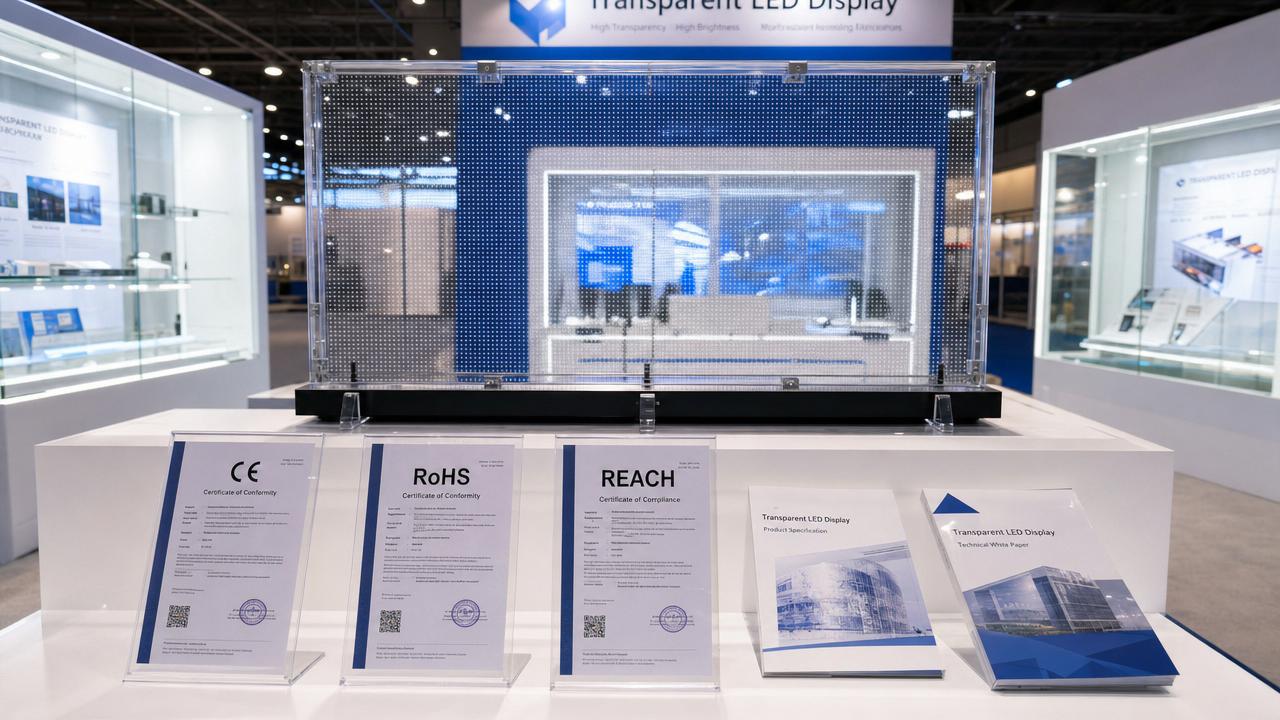
On June 11, 2026, the 12th China (Shanghai) International Technology Fair signaled a practical shift in how transparent LED screens are being evaluated for European and U.S. projects. The development is worth industry attention because buyer focus at the show was not limited to product display; it centered on specification consistency, material matching, and complete CE, RoHS, and REACH compliance documentation, all of which can affect manufacturers, exporters, distributors, integrators, and delivery planning across the supply chain.
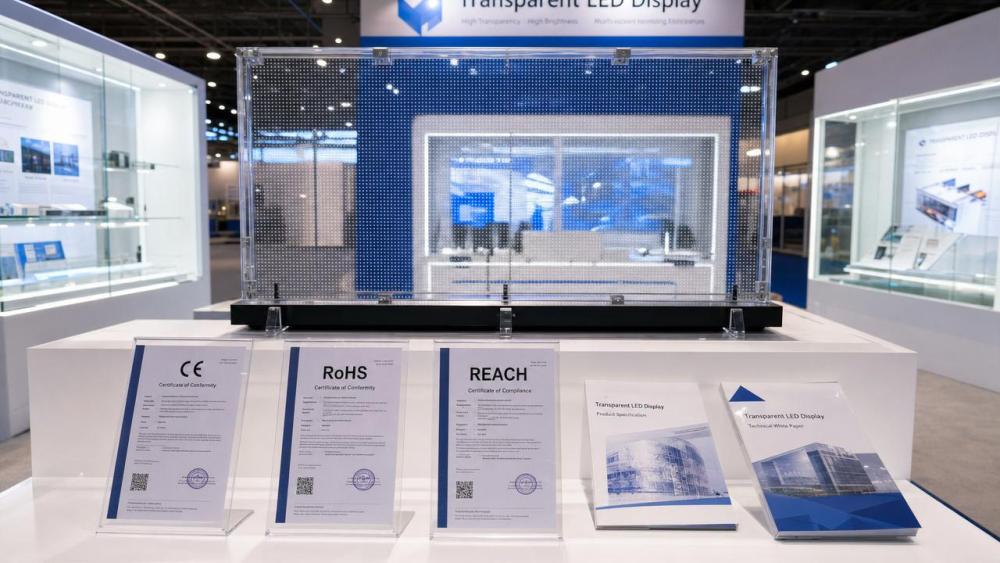
What Buyers Checked at the Shanghai Fair
From June 11 to 13, the 12th China (Shanghai) International Technology Fair (CSITF) hosted a transparent LED screen exhibition area that received more than 230 European and U.S. distributors and system integrators. Buyers from Germany, the Netherlands, and the United States concentrated their inspections on P0.9-P1.5 glass-based transparent screen samples. The stated points of attention were consistency in optical transmittance, thermal expansion matching of the glass backplane, and a full compliance document package covering CE, RoHS, and REACH. The event also indicated that upgrades in commercial window displays and retail spaces in Europe and the United States are being transmitted more quickly to Chinese supply chains.
Why the Signal Matters Along the Supply Chain
For exporters, documentation moves closer to the purchase decision
From an industry perspective, exporters of transparent LED products may feel the impact first because buyer review appears to be closely tied to whether technical samples are supported by complete compliance files. What deserves closer attention is that certification and materials-related paperwork may increasingly influence quotation, sample approval, and order conversion rather than being treated only as a later shipment-stage formality.
For manufacturers, process stability becomes part of trade readiness
Analysis shows that manufacturers of glass-based transparent screens may need to pay closer attention to production consistency where optical transmittance and thermal expansion matching are concerned. The likely impact is not only on product engineering, but also on quality records, sample-to-batch consistency, and delivery preparation when buyers compare visible performance with supporting technical files.
For distributors and integrators, technical review may become more front-loaded
Observably, distributors and system integrators are likely to face more detailed pre-procurement checks when selecting products for commercial window and retail applications. The business effect may appear in supplier screening, technical specification alignment, and document completeness review, especially where end customers expect both display performance and compliance traceability to be clear before project confirmation.
For testing and compliance service providers, response speed may matter more
It is more appropriate to understand this as a sign that testing support and compliance file preparation may be drawn earlier into the sales cycle. If buyers continue to focus on CE, RoHS, and REACH documentation at the sample validation stage, service providers involved in testing, document review, and file coordination may need to match faster procurement timelines and more product-specific requests.
What Companies Should Watch Next
Keep compliance files aligned with actual sample configurations
Analysis shows that companies should check whether the CE, RoHS, and REACH document package corresponds clearly to the exact sample configuration presented to buyers. Where products are differentiated by pitch, glass structure, or other technical features, any gap between sample presentation and supporting documents could become a practical issue in procurement discussions.
Track how technical expectations appear in buyer requests
What deserves closer attention is whether requirements related to optical transmittance consistency and glass backplane thermal expansion matching begin to appear more explicitly in RFQs, tender documents, or technical review lists. The current information does not confirm that such wording has already become standard, so this remains a point for continued monitoring rather than a settled market rule.
Prepare for tighter coordination across sales, engineering, and delivery
Observably, the buyer focus seen at the fair suggests that sales teams, engineering teams, and compliance staff may need closer coordination before samples are sent or export discussions advance. The practical issue is less about broad management change and more about whether technical data, test records, and product descriptions can support the same claims made during procurement communication.
Watch delivery and after-sales exposure tied to traceability
From an industry perspective, when procurement attention starts with verification of specification consistency and compliance files, later-stage delivery, acceptance, and after-sales handling may also place more weight on traceability. Companies should therefore keep an eye on how quality records, product identification, and document retention are handled in export-facing business workflows.
How This Development Should Be Read
Observably, this development is better understood as an execution signal than as a newly announced rule. No new regulation, policy number, or formal enforcement notice was provided in the input, so it would be inaccurate to describe the event as a confirmed regulatory change on its own. Analysis shows, however, that buyer behavior at the fair reflects a clearer market-side application of existing compliance and technical review expectations, especially for products entering European and U.S. commercial display scenarios. That is why continued attention to certification interpretation, procurement language, and market feedback remains necessary.
A Practical Reading for the Market
In practical terms, the fair points to a procurement environment in which transparent LED screen suppliers may be assessed not only on display effect, but also on whether material compatibility and compliance documentation can stand up to early-stage inspection. It is more appropriate to understand this event as a concrete market signal that downstream overseas requirements are being transmitted upstream into sourcing and sample evaluation, rather than as proof that a new formal rule has fully landed.
Basis of This Article
This article is based on the user-provided news title, event date, and event summary. For developments of this kind, source types commonly worth checking include official event releases, regulatory authority publications, trade or customs information, industry association updates, standards organization materials, and reporting from established professional media. A specific official source link was not provided in the input, so further verification is still needed. What remains to be watched includes any later clarification in compliance practice, changes in procurement documents, evolving technical review language, industry feedback, and how companies implement these requirements in actual export and delivery workflows.
Related News