
Acrylic Signage Systems Explained: Types, Mounting Options, and Best-Fit Applications
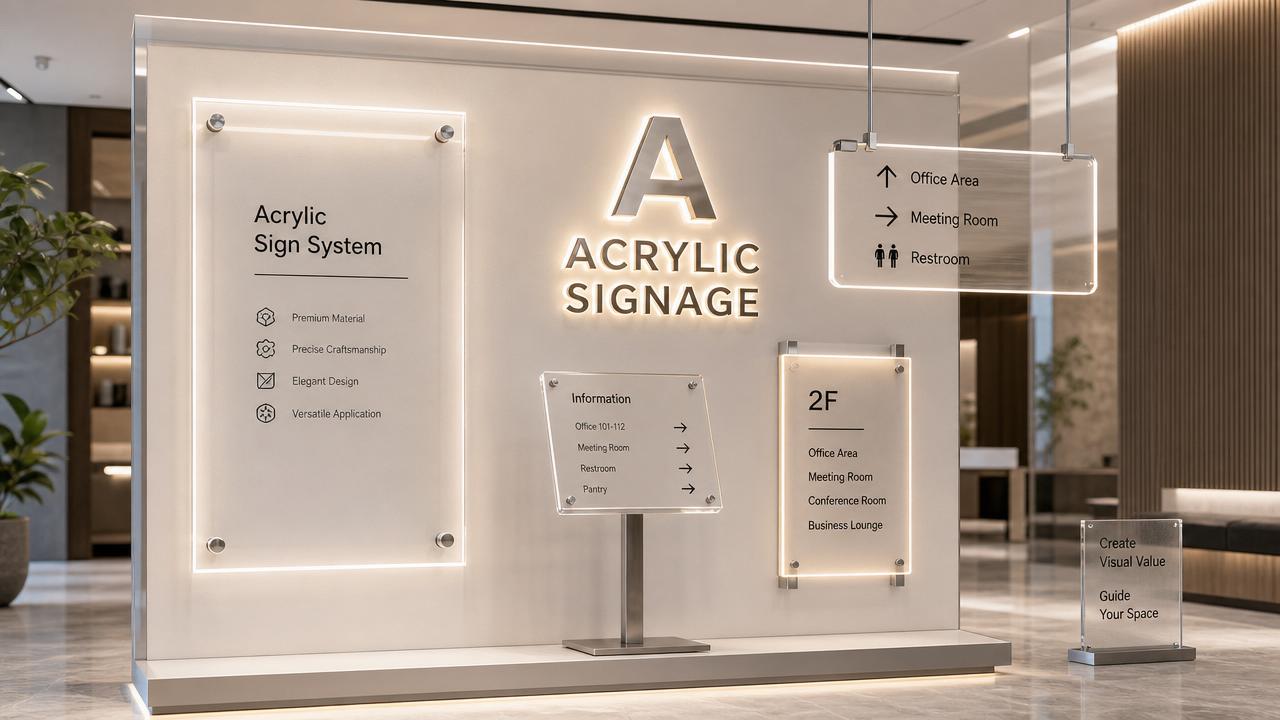
Why acrylic signage systems remain highly relevant
Acrylic signage systems sit at the intersection of branding, navigation, and visual presentation.
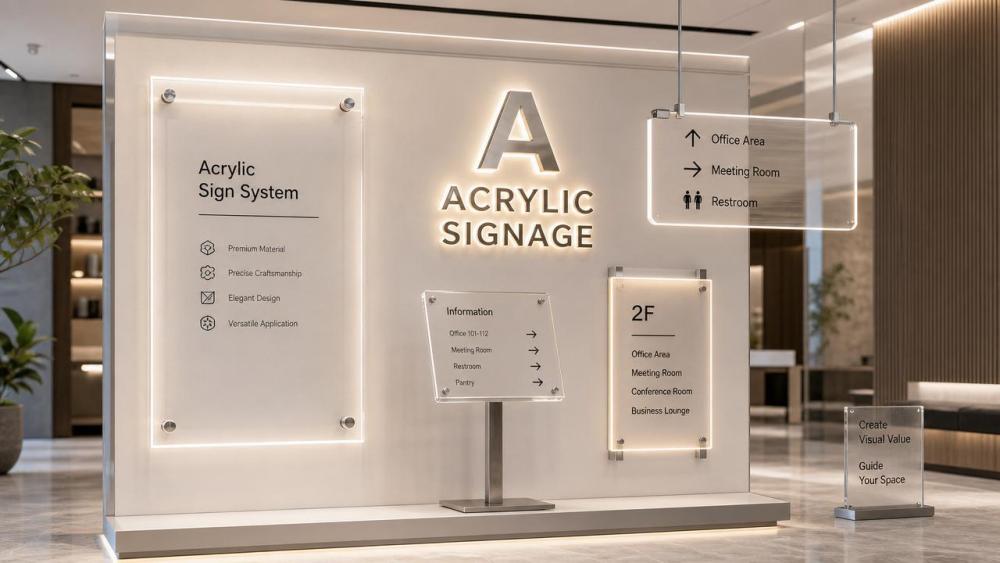
They appear in retail stores, offices, hospitality venues, transport hubs, showrooms, exhibitions, and public facilities.
Their popularity is not only about a polished look.
They also offer flexible fabrication, stable surface quality, good light transmission, and compatibility with illuminated display systems.
That matters in a market where visual communication must work across physical spaces, digital environments, and brand experience strategies.
From the broader CDES perspective, acrylic signage systems are part of the same commercial display ecosystem as digital signage, LED light boxes, wayfinding structures, and exhibition graphics.
In practice, the decision is rarely just about shape or color.
Specifiers usually need to judge viewing distance, mounting conditions, lighting behavior, durability, maintenance effort, and how the sign fits wider architectural or display systems.
That is why understanding types, mounting options, and best-fit uses can prevent expensive redesigns later.
What acrylic signage systems actually include
The term covers more than a single product category.
It refers to sign solutions that use acrylic panels, acrylic letters, acrylic light diffusers, or acrylic-faced illuminated assemblies.
Some are purely decorative and informational.
Others are engineered for lighting uniformity, brand visibility, and repeated commercial use.
Cast acrylic and extruded acrylic are both common, but they behave differently.
Cast material is often chosen for better optical clarity and finishing quality.
Extruded sheet is often easier to process at scale and can support cost-sensitive projects.
Surface choices also change performance.
Clear acrylic delivers a glass-like appearance with lower weight.
Frosted acrylic softens light and reduces glare.
Colored, printed, or laminated acrylic supports stronger brand expression and layered depth.
Main formats seen in commercial projects
How mounting options change performance
Mounting is often underestimated when evaluating acrylic signage systems.
Yet installation method affects legibility, lifespan, cleaning access, cable routing, and perceived quality.
Common mounting approaches
- Direct wall fixing suits flat signs where minimal projection is preferred.
- Standoff mounting creates depth and a premium floating effect.
- Suspended mounting works for double-sided visibility in corridors or retail zones.
- Frame-mounted systems support modular graphics and easier panel replacement.
- Freestanding structures fit temporary events, lobbies, and exhibition circulation paths.
The best option depends on substrate strength, wind exposure, maintenance access, and whether illumination is integrated.
For example, a simple adhesive method may look efficient at first.
However, it may become unreliable on textured surfaces, humid interiors, or outdoor façades with thermal movement.
By contrast, mechanical fixing adds hardware visibility but usually improves serviceability and long-term stability.
In illuminated acrylic signage systems, mounting also influences heat dissipation and power component concealment.
That becomes especially relevant in high-traffic retail or hospitality environments where appearance and reliability carry equal weight.
Where acrylic signage systems fit best
Not every signage challenge calls for acrylic.
Its value becomes clearer when matched to the right environment and communication task.
Interior branding and reception areas
Acrylic signage systems work well where first impressions matter.
Layered panels, polished edges, and halo-lit letters can make a brand wall feel more architectural than printed graphics alone.
Wayfinding and directories
For campuses, offices, hospitals, and mixed-use sites, acrylic offers a balance between visual clarity and update flexibility.
Modular inserts and replaceable graphics reduce disruption when tenant information changes.
Retail display and promotional zones
Retailers often use acrylic signage systems for product storytelling, price communication, light boxes, and display stands.
The material supports color consistency and can integrate with LED light guide technology for a brighter, cleaner presentation.
Exhibitions and event environments
In exhibition systems, weight, assembly speed, and transport efficiency matter.
Acrylic elements can pair well with aluminum frames, truss structures, and modular stands when a project needs visual impact without excessive mass.
Illuminated commercial communication
Acrylic remains a practical face material for luminous signage and light boxes.
Its optical behavior matters in applications where uniformity, brightness control, and brand visibility are being evaluated together.
Current industry considerations beyond appearance
The most useful conversations around acrylic signage systems now go beyond aesthetics.
They are increasingly tied to operational and commercial outcomes.
One concern is lighting quality.
Uneven diffusion, hotspots, and poor edge brightness can reduce visual value even when fabrication looks precise.
Another concern is environmental resistance.
Outdoor or semi-outdoor use introduces UV exposure, moisture, temperature change, and surface aging issues.
There is also a growing focus on installation risk.
A sign may look simple, but fixing loads, wiring paths, and substrate conditions still need proper review.
For projects connected to larger display networks, compatibility becomes another practical issue.
Acrylic elements often need to coexist with LED walls, kiosks, projection surfaces, or illuminated architectural features.
That broader systems view is central to how CDES frames commercial visual decisions.
How to compare options with fewer surprises
A practical evaluation process usually starts with the communication goal, not the material sample.
If the sign must be read quickly at distance, letter depth and contrast matter more than decorative edge detail.
If the sign supports ambient branding, finish quality and integration with lighting may matter more.
- Check whether the sign is informational, directional, promotional, or identity-led.
- Assess viewing distance, angle, and surrounding light conditions.
- Review panel thickness, edge treatment, and graphic application method.
- Confirm mounting substrate, access for maintenance, and replacement needs.
- For illuminated acrylic signage systems, compare light source quality and diffusion uniformity.
- For exterior use, verify weather resistance, sealing strategy, and expected aging behavior.
These checkpoints help turn a visually driven choice into a more reliable specification decision.
They also make supplier comparisons more meaningful because the evaluation is tied to actual use conditions.
A useful next step for specification and sourcing
Acrylic signage systems are versatile because they bridge aesthetics, function, and fabrication flexibility.
Still, the best result usually comes from matching the sign format to the communication task, environment, and installation method.
For anyone reviewing options, it helps to compare samples, lighting performance, mounting details, and maintenance assumptions together.
That approach gives a clearer basis for judging commercial suitability, especially when acrylic signage systems are part of wider display, branding, or exhibition projects.
From there, the next move is straightforward: define the scene, shortlist the format, and test each option against real operating conditions rather than visual preference alone.
Related News
- Acrylic Signage Systems Explained: Types, Mounting Options, and Best-Fit ApplicationsTime : Jun 16, 2026
- Custom Acrylic Signage Systems: What to Compare Before Requesting a QuoteTime : Jun 16, 2026
- Illuminated Signage Types Explained: Which Lighted Sign Works Best for Your Storefront?Time : Jun 12, 2026