
Attention economics is changing how screens are planned
Attention economics is changing how screens are planned
Attention economics is redefining how commercial screens are planned, shifting decisions from simple visibility to measurable influence, dwell time, and revenue potential.
For modern spaces, every display must do more than shine brightly. It must attract, hold, and convert attention into brand lift, engagement, and monetized traffic.
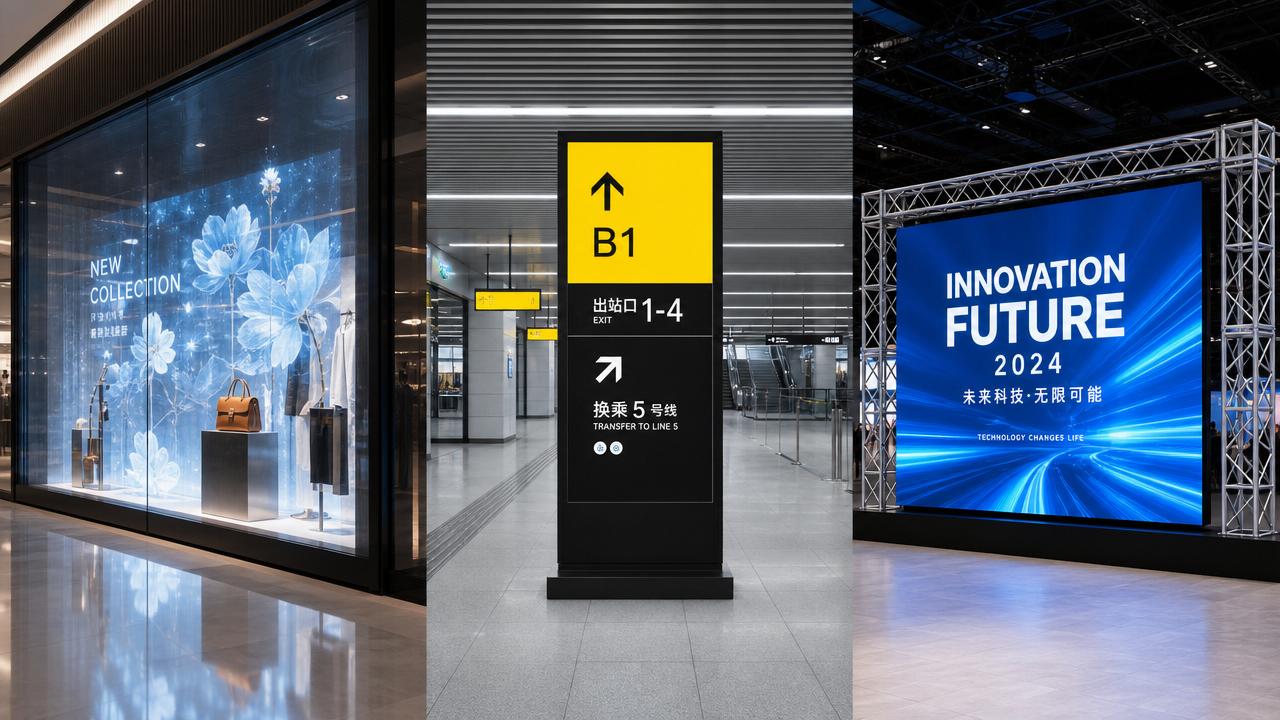
This shift affects LED walls, digital signage, laser projection, light boxes, and truss-supported visual systems across retail, transport, tourism, and events.
Why attention economics matters in different screen planning scenarios
Attention economics changes planning because not all screen locations create equal value. A busy corner, a transit platform, and an exhibition hall demand different visual strategies.
In practical terms, screen planning now starts with audience behavior. Viewing distance, movement speed, ambient light, and repeat exposure all shape performance.
CDES tracks this shift closely through commercial visual intelligence, linking pixel precision, structural safety, optical stability, and traffic monetization into one planning logic.
Retail streets and malls: where attention economics rewards repeat exposure
In retail environments, attention economics favors screens that support repeated short exposures. Shoppers often glance first, then return visually before acting.
Fine-pitch LED video walls and frameless light boxes work well here. They strengthen storefront identity, improve campaign flexibility, and increase the perceived value of the space.
Transparent screens can also preserve openness while adding motion-rich storytelling. This is useful where premium brands want visual drama without blocking merchandise views.
Core judgment points for retail screens
- Can the display stop foot traffic within three seconds?
- Does content remain clear under strong daylight and mixed indoor lighting?
- Can the system support frequent creative updates without operational strain?
Transit and urban DOOH networks: where attention economics depends on frequency
At bus shelters, metro corridors, and roadside screens, attention economics is driven by audience volume and repeated reach rather than long viewing sessions.
Here, high-brightness digital signage becomes critical. Outdoor readability, thermal control, remote maintenance, and uptime directly influence media value.
A screen that fails during heat, rain, or glare loses impressions instantly. In this scenario, engineering reliability is part of attention economics, not a separate issue.
Core judgment points for transit displays
- Brightness must remain effective in direct sunlight.
- Content should be readable during brief viewing windows.
- Network reliability must protect campaign continuity.
Cultural tourism and landmark media: where attention economics values spectacle
In tourism districts and public landmarks, attention economics often rewards unforgettable visual moments rather than simple message repetition.
This is where naked-eye 3D LED screens and high-power laser projection stand out. They transform buildings and plazas into social media magnets.
The planning question is not only image quality. It also includes façade scale, audience gathering patterns, environmental conditions, and revenue from sponsorship or destination branding.
Exhibitions and live events: where attention economics must align with structure
Trade shows, launches, and festivals create compressed attention battles. Visual systems need impact, fast assembly, and dependable structural performance.
Large LED surfaces and projection rigs often rely on aluminum truss systems. In this setting, attention economics only works when spectacle and safety are equally planned.
A visually impressive stage loses value if wind load, suspended weight, or setup speed were underestimated. Structural mechanics directly protect commercial outcomes.
How scenario needs differ under attention economics
Practical planning suggestions shaped by attention economics
- Start with audience flow maps before choosing screen size or resolution.
- Match pixel pitch to real viewing distance, not showroom preference.
- Treat brightness, cooling, and compliance as performance drivers.
- Evaluate whether content needs repetition, immersion, or landmark-scale impact.
- Check structural loading early for suspended or outdoor visual systems.
Common misjudgments when applying attention economics
One common mistake is assuming larger screens always win attention. In many settings, content relevance and placement outperform scale alone.
Another mistake is separating creative ambition from engineering conditions. Heat resistance, EMC compliance, and truss stability all influence final audience experience.
Attention economics also fails when measurement stops at impressions. True value comes from linking exposure with dwell time, return visits, sponsorship premium, or conversion.
Next steps for better screen planning
Attention economics is now a practical planning framework for commercial visuals. It helps determine which screens deserve investment and how each space should perform.
CDES supports this process by connecting display technology, optical control, environmental resilience, and structural intelligence across real application scenarios.
The smartest next move is to review each site by audience behavior, content goals, physical constraints, and monetization logic before selecting any display system.
Related News