
Commercial displays vary more than most buyers expect
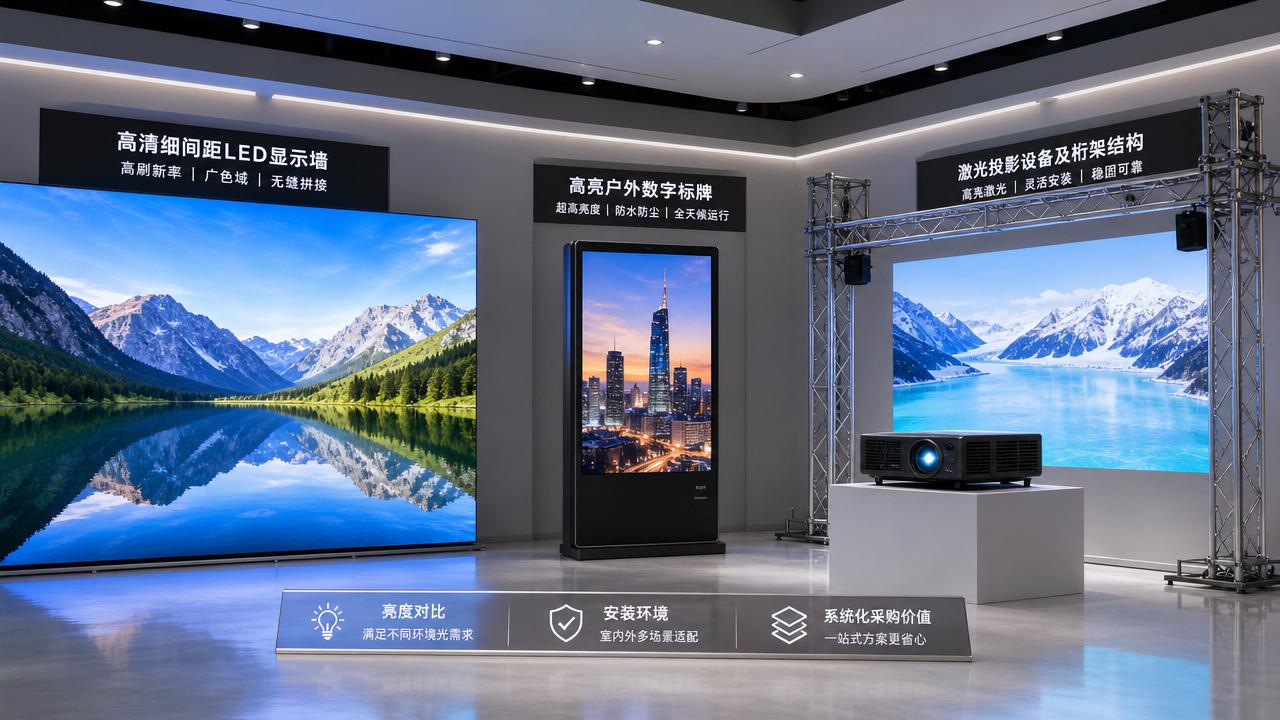
Commercial displays vary far more than many procurement teams expect, from fine-pitch LED walls and high-brightness digital signage to laser projection systems and rapid-assembly trusses. For buyers balancing visual impact, durability, compliance, and ROI, understanding these differences is essential. This guide explores the key factors that shape performance and purchasing value in today’s commercial display market.
Many buyers begin with a simple assumption: a screen is a screen. In practice, commercial displays differ widely in brightness, pixel pitch, viewing distance, structural demands, thermal design, certification, and lifecycle cost.
That variation matters because the wrong specification can damage more than image quality. It can increase maintenance, weaken audience impact, create installation delays, trigger compliance problems, or reduce the revenue performance expected from the investment.
For procurement teams, the key question is not which product looks impressive in a showroom. It is which system fits the real operating environment, business objective, and long-term ownership model.
Why commercial displays create more buying complexity than expected
The term commercial displays covers several very different categories. Fine-pitch LED walls, outdoor digital signage, laser projectors, illuminated branding systems, and stage truss structures solve different problems and should not be compared only by upfront price.
Each category has its own performance logic. LED walls are shaped by pixel pitch, module consistency, and control systems. Digital signage depends heavily on brightness, weather resistance, and network management. Projection systems rely on optics, throw distance, ambient light control, and blending accuracy.
Even support structures change the buying decision. A large visual installation may perform beautifully on paper, but without reliable truss engineering, wind-load calculation, and safe load-bearing design, the project risk rises sharply.
This is why experienced buyers evaluate commercial displays as complete systems rather than isolated hardware units. The image surface, the electronics, the enclosure, the mounting method, and the operating environment all affect final value.
What procurement teams usually care about most
Most procurement decisions revolve around five issues: visual impact, durability, total cost of ownership, compliance risk, and return on investment. These factors often matter more than maximum specification claims in product brochures.
Visual impact is the first filter because the display must attract attention and serve its commercial purpose. A retail landmark, transit advertising screen, or cultural tourism installation must deliver visibility in its actual setting, not just in a dark demo room.
Durability comes next. Outdoor installations face heat, rain, dust, UV exposure, and changing electrical conditions. Indoor systems may still face long operating hours, thermal stress, and high expectations for color consistency and uptime.
Total cost of ownership is where many buying mistakes appear. A lower-priced system may consume more power, need more maintenance, suffer faster brightness decay, or require earlier replacement, making it more expensive over time.
Compliance is another critical concern, especially for multinational projects. EMC performance, electrical safety, structural certification, and local installation codes can affect import, approval, insurance, and operating continuity.
Finally, buyers want ROI. In commercial display projects, ROI may come from advertising revenue, retail conversion uplift, stronger brand presence, premium sponsorship, visitor attraction, or better event monetization.
How to choose the right commercial display for the real use case
The best procurement process starts with scenario definition, not product comparison. Buyers should first clarify the installation location, target audience distance, ambient light level, content type, operating schedule, and revenue or communication objective.
For close-viewing premium interiors, fine-pitch LED may be the right answer. In these cases, tighter pixel pitch improves image detail and reduces visible gaps, especially when the display supports high-end branding, control rooms, or luxury retail environments.
For outdoor media networks, high-brightness digital signage may be more suitable. Here, readability under direct sunlight, thermal stability, enclosure sealing, and remote content management usually matter more than ultra-fine resolution.
For architectural storytelling or night tourism, laser projection may outperform physical screens. Projection can transform irregular building facades into dynamic visual canvases without creating a permanent large-format screen structure.
For events, exhibitions, and touring activations, display selection cannot be separated from truss and rigging requirements. Fast assembly, structural safety, transportation efficiency, and repeat deployment often shape procurement priorities more than display elegance alone.
In short, the right commercial displays are chosen by application logic. Buyers who match the system to the business scenario usually achieve better performance and lower long-term risk.
Key technical differences that directly affect purchasing value
Brightness is one of the most misunderstood specifications. More brightness is not always better, but insufficient brightness can ruin outdoor performance. Buyers should assess visibility according to daylight exposure, installation angle, and surrounding competition.
Pixel pitch should be tied to viewing distance. Paying for extremely fine pitch in a long-distance outdoor application may waste budget, while choosing coarse pitch for close-view retail environments can weaken premium brand perception.
Color performance also deserves attention. Uniformity, calibration stability, and resistance to drift under heat are often more important than broad marketing claims about color richness. Inconsistent panels quickly reduce perceived quality.
Serviceability is another major factor. Front maintenance access, modular replacement speed, spare part availability, and remote diagnostics all affect downtime. Procurement teams should ask how fast a failed component can be replaced in actual operating conditions.
Energy use matters more than ever. Large commercial displays can become significant operating assets with equally significant electricity costs. Efficient power design and thermal management improve both sustainability and ownership economics.
Where procurement risk usually hides
One common risk is buying against sample-room conditions instead of field conditions. A display that looks excellent indoors may underperform when exposed to sunlight, vibration, humidity, or continuous public operation.
Another risk is separating visual procurement from structural procurement. Large LED screens, hanging signage, and projection support systems depend on reliable mounting and load calculations. Ignoring this relationship can create serious safety and insurance issues.
Buyers should also examine supplier support depth. Some vendors sell hardware well but provide weak commissioning, calibration, training, or post-sale service. For mission-critical commercial displays, support capability is part of the product value.
Specification inflation is another problem. Procurement teams should verify brightness measurement standards, ingress protection levels, component brands, control system compatibility, and warranty terms rather than relying only on headline numbers.
Finally, there is the risk of undervaluing content operations. Even the best commercial displays lose impact if content strategy, scheduling, and audience relevance are poor. Hardware and content performance should be planned together.
A practical evaluation framework for buyers
A useful approach is to score options across six dimensions: application fit, visual performance, environmental durability, compliance and safety, service model, and financial return. This helps prevent overemphasis on any single metric.
Application fit asks whether the display solves the actual business objective. Visual performance measures clarity, brightness, color, and audience impact. Durability examines operating resilience across temperature, moisture, and runtime demands.
Compliance and safety cover certifications, EMC behavior, electrical design, and structural reliability. Service model includes installation support, training, remote monitoring, warranty response, and spare parts readiness.
Financial return should include more than purchase price. Buyers should consider maintenance labor, power consumption, downtime risk, upgrade flexibility, and the value created through stronger engagement or monetization performance.
This framework helps procurement teams compare commercial displays with greater discipline. It also improves communication between purchasing, engineering, operations, and commercial stakeholders who may judge value differently.
Conclusion: better buying starts with better classification
Commercial displays vary more than most buyers expect because they are not one market but several overlapping system categories. The differences between LED walls, signage, projection, illuminated branding, and truss-supported installations are commercially significant.
For procurement teams, the smartest decision is rarely the cheapest unit or the highest published specification. It is the solution that aligns with viewing conditions, operating demands, compliance requirements, maintenance reality, and revenue expectations.
When buyers evaluate commercial displays through the lens of use case, lifecycle value, and risk control, they make stronger investments. That is what turns a display purchase from a hardware transaction into a durable business asset.
Related News