
EU LED Light Pollution Guidance Raises Export Bar
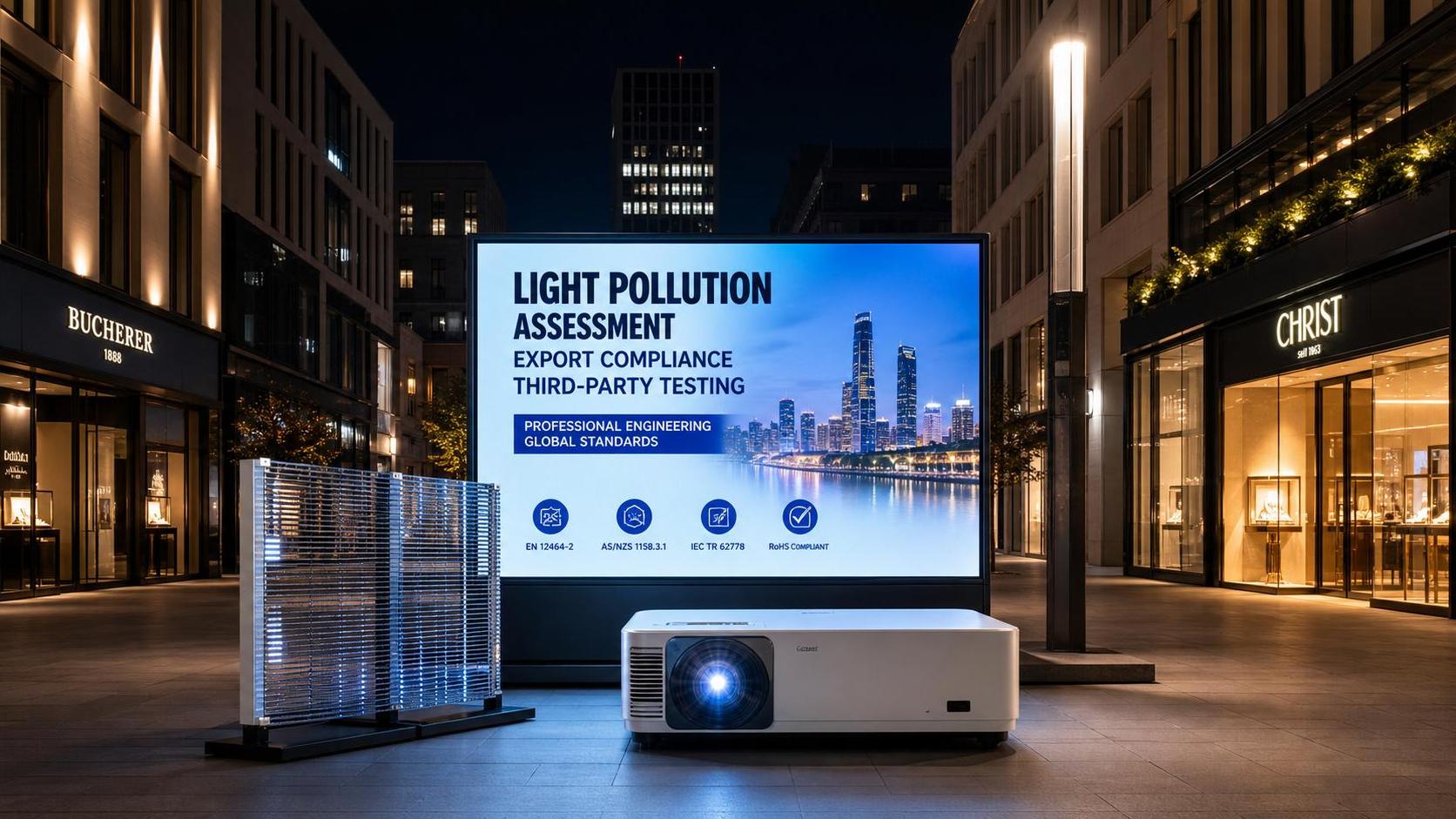
On July 17, 2026, the European Environment Agency (EEA) released version 2.0 of its guidance for assessing light pollution from outdoor display systems, with export compliance implications beginning in October 2026. The update deserves close attention from LED display makers, outdoor LCD suppliers, projection system providers, certification teams, and EU-bound exporters because it expands what must be evaluated and links those assessments more directly to market access and customs clearance in practice.
What the updated guidance now covers
The EEA issued Outdoor LED Display Light Pollution Assessment Guidance v2.0 on July 17, 2026. According to the provided information, the new version for the first time brings vertical illuminance and sky glow into mandatory assessment items for naked-eye 3D displays, high-brightness DOOH screens, and ultra-short-throw projection mapping systems.
The same guidance also requires transparent LED screens, outdoor high-brightness LCD products, and architectural projection systems exported to the European Union to provide third-party light pollution simulation reports. Although the guidance itself is not a regulation, it has already been adopted by CE certification bodies as a technical reference, which directly affects product entry and customs clearance.
Where the pressure is likely to appear first
Export-facing manufacturers may face new documentation hurdles
From an industry perspective, manufacturers shipping display products into the EU are likely to feel the impact first because the issue is no longer limited to product hardware performance alone. The addition of third-party light pollution simulation reports means compliance preparation may extend into technical documentation, certification support, and pre-shipment coordination.
Certification and market-access teams will need to adjust review workflows
Because CE certification bodies are using the guidance as a technical reference, compliance teams and testing coordinators may need to reassess how products are prepared for submission. What deserves closer attention is the practical difference between a non-legislative guidance document and its real effect once it becomes part of certification review and customs-related acceptance.
Project delivery and system integration could see earlier planning requirements
Suppliers of transparent LED, outdoor high-brightness LCD, and architectural projection systems may need to account for light pollution assessment earlier in project planning. This is especially relevant where system configuration, brightness behavior, or installation context could influence the required simulation materials and related client communications.
Buyers and channel partners may need clearer compliance expectations
Distributors, procurement teams, and downstream project buyers involved in EU-bound business may also be affected, mainly through approval timing, document completeness, and delivery scheduling. Observably, the business risk is less about the announcement alone and more about whether the required supporting reports are ready when products move into certification or customs processes.
What companies should watch now
Track how the guidance is cited in actual certification practice
Analysis shows that the key issue is not only the text of the guidance itself, but how consistently CE certification bodies apply it as a technical reference. Companies should pay attention to whether requests for light pollution simulation reports become standard across relevant product categories and export cases.
Review whether current product lines fall within the named categories
The provided information specifically points to naked-eye 3D displays, high-brightness DOOH screens, ultra-short-throw projection mapping systems, transparent LED screens, outdoor high-brightness LCD, and architectural projection systems. For companies with overlapping product portfolios, the immediate task is to identify which SKUs, bids, or shipments could trigger added assessment expectations.
Prepare third-party reporting paths before shipment deadlines tighten
Since third-party light pollution simulation reports are named as a requirement for certain exports to the EU, exporters should pay attention to report preparation, supporting materials, and timing. In practical terms, this affects document readiness, handoff between engineering and compliance teams, and communication with customers about lead times and acceptance conditions.
Separate policy signaling from operational impact
It is more appropriate to understand this as a case where a guidance document, while not itself a law, may still shape day-to-day trade outcomes. That distinction matters for internal planning: legal status and operational consequence are not identical, and companies should avoid treating the update as either purely informational or already identical to formal legislation.
Why this looks like more than a routine technical update
Analysis shows that this development signals a tighter compliance environment around visual display emissions rather than a simple wording revision. The inclusion of vertical illuminance and sky glow, together with third-party simulation requirements for specified product types, suggests that environmental assessment expectations are moving closer to front-line export execution.
At the same time, it would be premature to overstate the final scope of impact beyond the facts provided. Observably, the immediate significance lies in compliance friction: products may still be technically marketable, but the path to certification acceptance and customs clearance may become more document-intensive for affected categories.
How to read the signal at this stage
The industry significance of this update lies in its practical influence on EU-bound display exports. Based on the confirmed information, this is best understood as an active compliance signal with near-term operational effects rather than a distant policy discussion. It is not yet a basis for broad claims beyond the named product groups and assessment items, but it is already relevant enough to affect how exporters prepare products, paperwork, and timelines for the EU market from October 2026.
Source basis and points still requiring verification
This article is based on the user-provided news title, event date, and event summary concerning the EEA's July 17, 2026 release of Outdoor LED Display Light Pollution Assessment Guidance v2.0 and its stated export compliance implications from October 2026. For this type of industry update, relevant source categories typically include official notices, certification body communications, company compliance updates, industry association materials, authoritative media coverage, and standard-related documents.
A specific official source link was not provided in the input, so the exact publication page and any subsequent implementation clarifications still require ongoing verification. Follow-up attention should focus on whether certification bodies issue more detailed application notes, whether customs-related practices become more explicit, and how consistently the guidance is applied across the affected display and projection categories.
Related News