
FCC Tightens EMC Rules for DOOH Displays
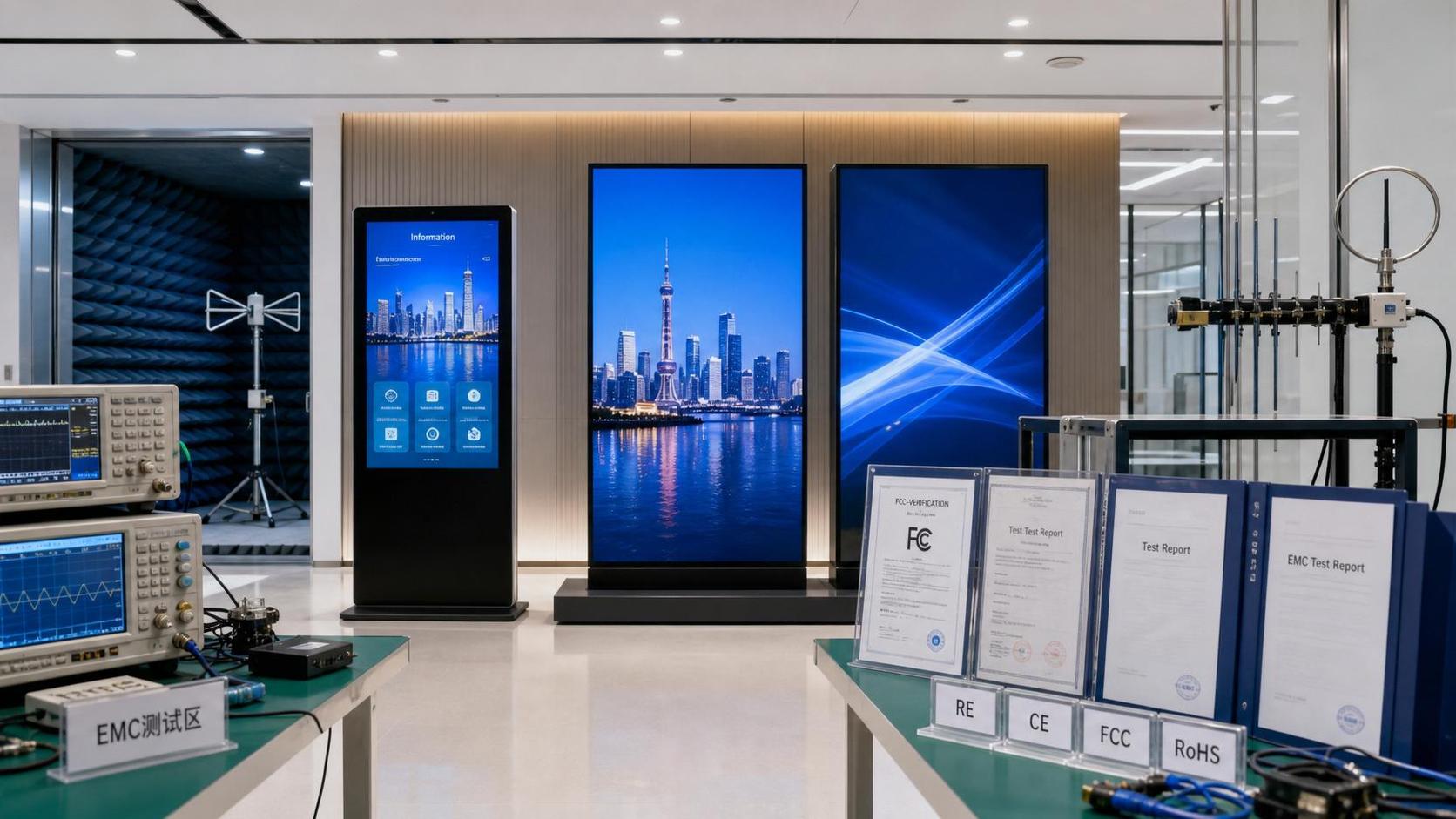
On June 22, 2026, the U.S. Federal Communications Commission (FCC) issued KDB 789025 D07v12, setting stricter EMC requirements for DOOH digital out-of-home display equipment deployed in public venues such as retail sites and transport hubs. The update is particularly relevant for manufacturers, exporters, channel operators, buyers, and service providers involved in interactive display and illuminated signage products, because the new rule ties market access more directly to Class B emissions compliance and complete certification documentation.
What the FCC Notice Changes
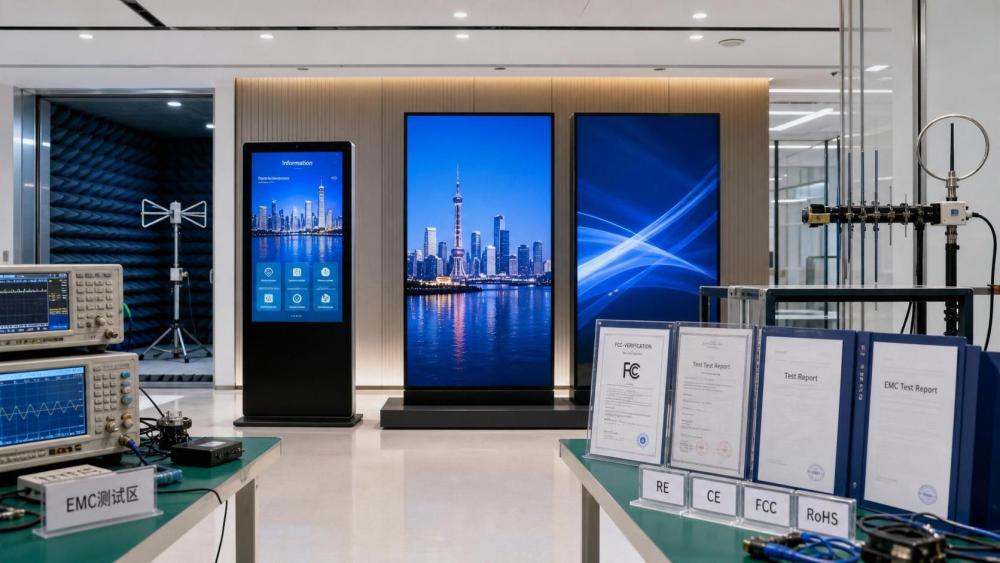
According to the provided information, the notice applies to DOOH digital advertising screens intended for public-facing deployment, including Interactive Touch Kiosks and Ultra-thin Light Boxes. Starting October 1, 2026, these products must meet stricter Class B conducted and radiated emission limits.
The notice also requires products to provide an FCC ID together with a complete EMC test report. The information provided states that the new rule covers more than 85% of China’s DOOH export models, and that non-compliant products may face FCC certification invalidation and channel delisting.
Where the Pressure May Appear First
Export-facing device makers
From an industry perspective, manufacturers serving the U.S. market may be affected first because product design, test readiness, and certification files now have a more direct impact on whether a model remains sellable. The main pressure point is likely to be the link between hardware configuration and EMC compliance documentation.
Trading and channel-side operators
Export traders, distributors, and channel operators may feel the impact in listing management, model screening, and shipment planning. What deserves closer attention is whether existing product lines can continue to be distributed after October 1, 2026, if supporting FCC ID and full EMC reports are incomplete or no longer aligned with the stricter limits.
Procurement and deployment teams
Buyers and deployment-side businesses in retail and transportation scenarios may need to pay closer attention to compliance status during sourcing and acceptance. The practical issue is not only product availability, but also whether compliance documents are complete enough to support procurement decisions and downstream deployment schedules.
Testing and supply-chain support roles
Service providers connected to testing, certification preparation, and delivery coordination may also be affected, because the rule raises the importance of timing, documentation completeness, and model-level compliance confirmation. Analysis shows that the compliance process itself could become a more visible part of order execution.
What Companies Should Watch Now
Model scope and product classification
Companies should first verify which exported DOOH models fall within the notice scope, especially public-use interactive and illuminated display equipment. This matters because the rule is tied to deployment context as well as product type.
Certification file completeness
Another immediate focus is whether each relevant model has both an FCC ID and a complete EMC test report that can support continued market access under the updated requirements. Firms relying on older certification assumptions may need to reassess file readiness.
Delivery timelines ahead of October 1
What deserves closer attention is the transition window before the October 1, 2026 effective date. For businesses with active U.S.-bound orders, procurement, testing coordination, and shipment commitments may need closer alignment with compliance review cycles.
Customer and supplier communication
Companies should also pay attention to communication with upstream suppliers and downstream customers. In practical terms, this means confirming documentation responsibilities, explaining any model status changes, and preparing for questions around certification validity and channel continuity.
Why This Looks Like More Than a Routine Update
Observably, this is not just a wording change in a compliance notice. Based on the provided information, the update directly connects stricter Class B limits with continued certification validity and channel availability. That makes it more than a background regulatory adjustment for companies that rely on the U.S. DOOH market.
At the same time, it is more appropriate to understand this as a clear regulatory signal with immediate operational implications rather than a fully settled industry outcome. The rule has been issued and the effective date is defined, but the full business impact will still depend on how individual product lines, documentation status, and channel requirements align in practice.
How to Read the Signal at This Stage
At this stage, the most balanced reading is that the FCC has raised the compliance threshold for public-facing DOOH display equipment in a way that could affect design verification, export execution, and channel continuity at the same time. For the industry, the key significance lies less in headline reaction and more in how quickly affected companies can map product scope, verify documentation, and adjust delivery planning.
It is more appropriate to understand this development as a near-term compliance change with longer-term signaling value. It already creates concrete requirements for covered products, while also indicating that public-deployment display equipment may face closer regulatory scrutiny going forward.
Basis of This Article
This article is based on the user-provided news title, event date, and event summary. The analysis is written from those inputs only and does not add unverified facts beyond the provided information.
For this type of development, relevant source categories typically include official notices, corporate disclosures, industry association updates, authoritative media coverage, and standards-related documents. A specific official source link was not provided in the input, so further verification remains necessary. Continued attention should be paid to any follow-up FCC wording, implementation interpretations, and compliance execution details affecting covered DOOH product categories.
Related News