
EU Sets New Light Limits for LED Displays
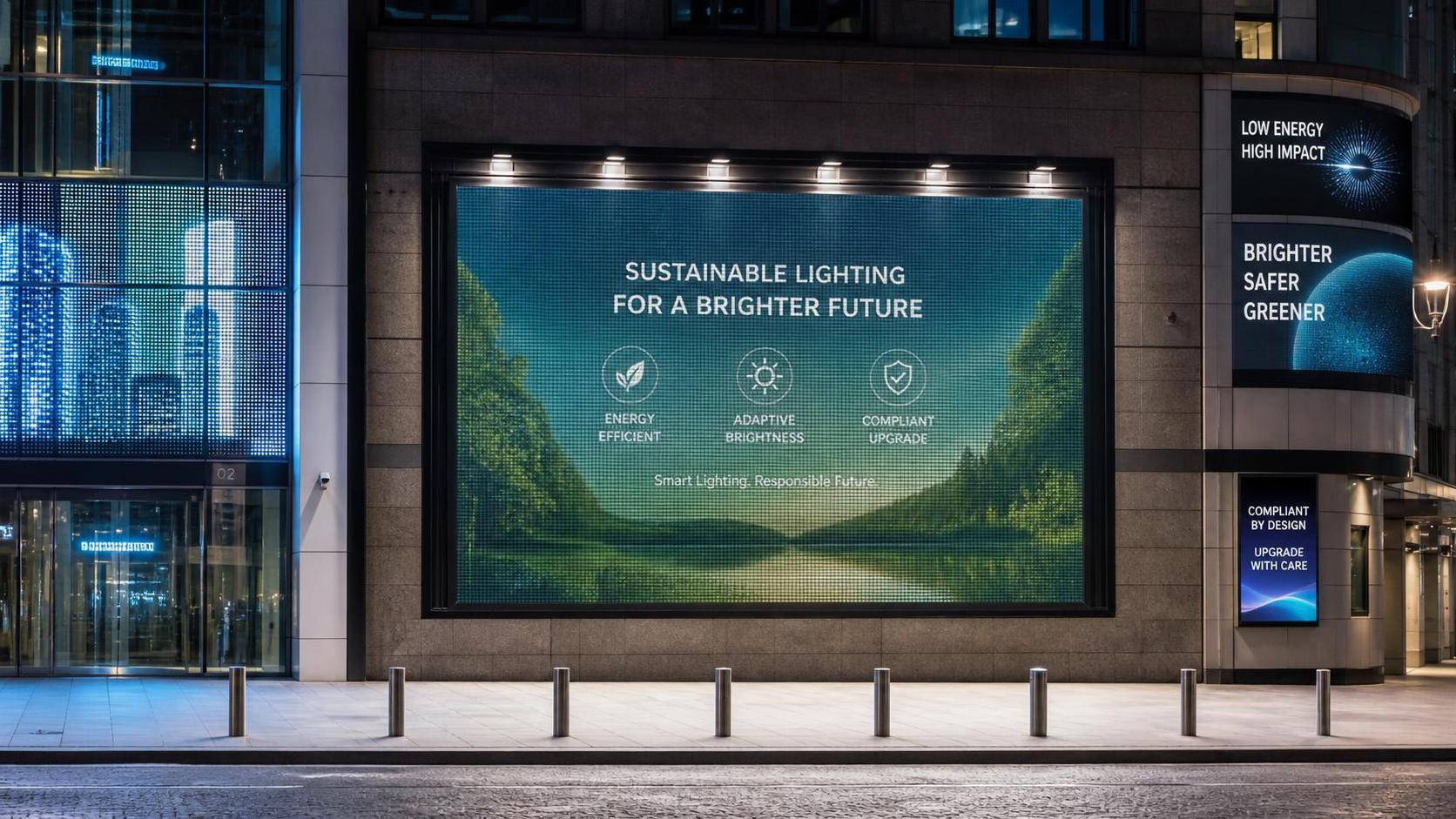
On August 6, 2026, the European Environment Agency (EEA) released a draft guideline that brings LED display products into the EU’s urban light-pollution control framework for the first time. The update matters not only to outdoor display makers, but also to exporters, project suppliers, and buyers involved in LED video walls, outdoor advertising screens, and architectural projection systems entering the European market, because the new technical limits are tied directly to market access from October 1, 2026.
What the draft guideline now requires
The document released by the EEA is titled Draft Guideline on Light Emission from DOOH Displays. According to the provided information, it sets clear technical limits for outdoor high-brightness LCD products, transparent LED screens, and naked-eye 3D display devices. These products are required to meet a maximum brightness of no more than 5000 cd/m2, a color temperature of no more than 4000K, and a nighttime automatic dimming response time of no more than 30 seconds.
The same information also states that the rule will apply from October 1, 2026, to all newly imported and on-sale products covered by the scope described above. This marks the first time LED displays have been explicitly included in this type of urban light-pollution regulatory framework in the EU.
Where the immediate pressure may appear in the value chain
Export-facing product suppliers will face compliance redesign questions
From an industry perspective, companies selling into Europe may be affected first because the stated limits are directly linked to access conditions for new imported and on-sale products. The practical pressure is likely to center on product specification review, model selection, and whether existing outdoor display configurations can still match customer requirements under the brightness, color temperature, and automatic dimming thresholds described in the guideline.
Manufacturers may need to reassess technical configuration choices
Analysis shows that manufacturers of outdoor high-brightness LCD, transparent LED, and naked-eye 3D display equipment are likely to focus on whether current designs align with the published thresholds. The impact may show up in product definition, engineering validation, and export-oriented model planning, especially where products were previously optimized around high-visibility output rather than light-emission restrictions.
Channel partners and project integrators may need to review deliverables
For distributors, integrators, and project suppliers serving European customers, the issue is not only product availability but also delivery alignment. What deserves closer attention is whether stocked or planned products for the EU market fall within the stated limits, and how project quotations, technical documentation, and customer communication may need to reflect the new compliance conditions.
Buyers and end-use project operators may pay more attention to specification certainty
Procurement teams and end-use operators in outdoor advertising and related display applications may also be affected because product selection decisions now intersect more directly with light-emission rules. Observably, the business concern here is less about broad market sentiment and more about whether imported display products can be specified and deployed without creating compliance uncertainty in the EU market.
What companies should watch before October 2026
Track whether official wording or implementation details change
Analysis shows that companies should monitor how the draft language is expressed in subsequent official communications, especially where scope, product categorization, or enforcement wording could affect compliance interpretation. The current signal is already commercially relevant, but businesses still need to distinguish between the published draft framework and any later clarifications that may shape implementation in practice.
Check product lines against the named technical thresholds
For companies already shipping or preparing to ship products to Europe, the immediate task is to compare relevant models with the stated limits of 5000 cd/m2, 4000K, and a 30-second nighttime dimming response. This is particularly relevant for outdoor high-brightness LCD, transparent LED screens, and naked-eye 3D displays because these categories are explicitly mentioned in the provided information.
Prepare documentation and customer communication early
What deserves closer attention is the commercial side of compliance preparation. Exporters and project suppliers may need to organize product specifications, technical statements, and customer-facing explanations in advance, especially for products already in sales channels or under discussion for EU-bound delivery after October 1, 2026.
Separate policy signaling from contract execution risk
From an industry perspective, one key issue is the difference between a regulatory signal and operational readiness. Companies may need to review procurement timing, shipment planning, and fulfillment assumptions for affected products, because the business risk can emerge not only from the rule itself but from late alignment between product design, documentation, and market-entry expectations.
Why this looks like more than a short-term notice
This section is an observation rather than a statement of fact. It is more appropriate to understand this development as a clear regulatory signal with immediate commercial implications, rather than as a routine technical update. The reason is that the guideline does not merely comment on display performance; it places LED display products within a formal light-pollution control context and ties that framework to import and sale conditions from a defined date.
At the same time, it would be premature to treat this as a complete picture of long-term market outcomes. Observably, the current information is sufficient to trigger compliance review, but the broader commercial effect on product portfolios, project pipelines, and supplier positioning still requires continued tracking as implementation language and market responses become clearer.
How the market may best read this development now
Based on the confirmed information, the most balanced reading is that the EU has moved LED display regulation in a more specific environmental compliance direction, with direct implications for outdoor display products entering or being sold in the market from October 1, 2026. For industry participants, the significance lies less in headline value and more in the fact that technical limits on brightness, color temperature, and dimming response are now part of access-related product considerations.
It is more appropriate to understand this as a concrete near-term compliance development and a longer-term policy signal at the same time. The immediate issue is product readiness for the EU market; the longer-view issue is that environmental performance requirements may now carry greater weight in display system design and export planning.
Basis of this article and points for continued verification
This article is based on the user-provided news title, event date, and event summary concerning the EEA’s August 6, 2026 release of the Draft Guideline on Light Emission from DOOH Displays. For this type of industry update, commonly relevant source categories may include official notices, company statements, trade association information, authoritative media coverage, and standards-related documents.
No specific official source link was provided in the input, so the exact official publication path still needs continued verification. Follow-up attention should remain on any further official wording, implementation clarification, and scope interpretation affecting outdoor display products, import compliance, and sales eligibility in the EU market.
Related News