
FCC Tightens EMC Limits for LED Display Equipment
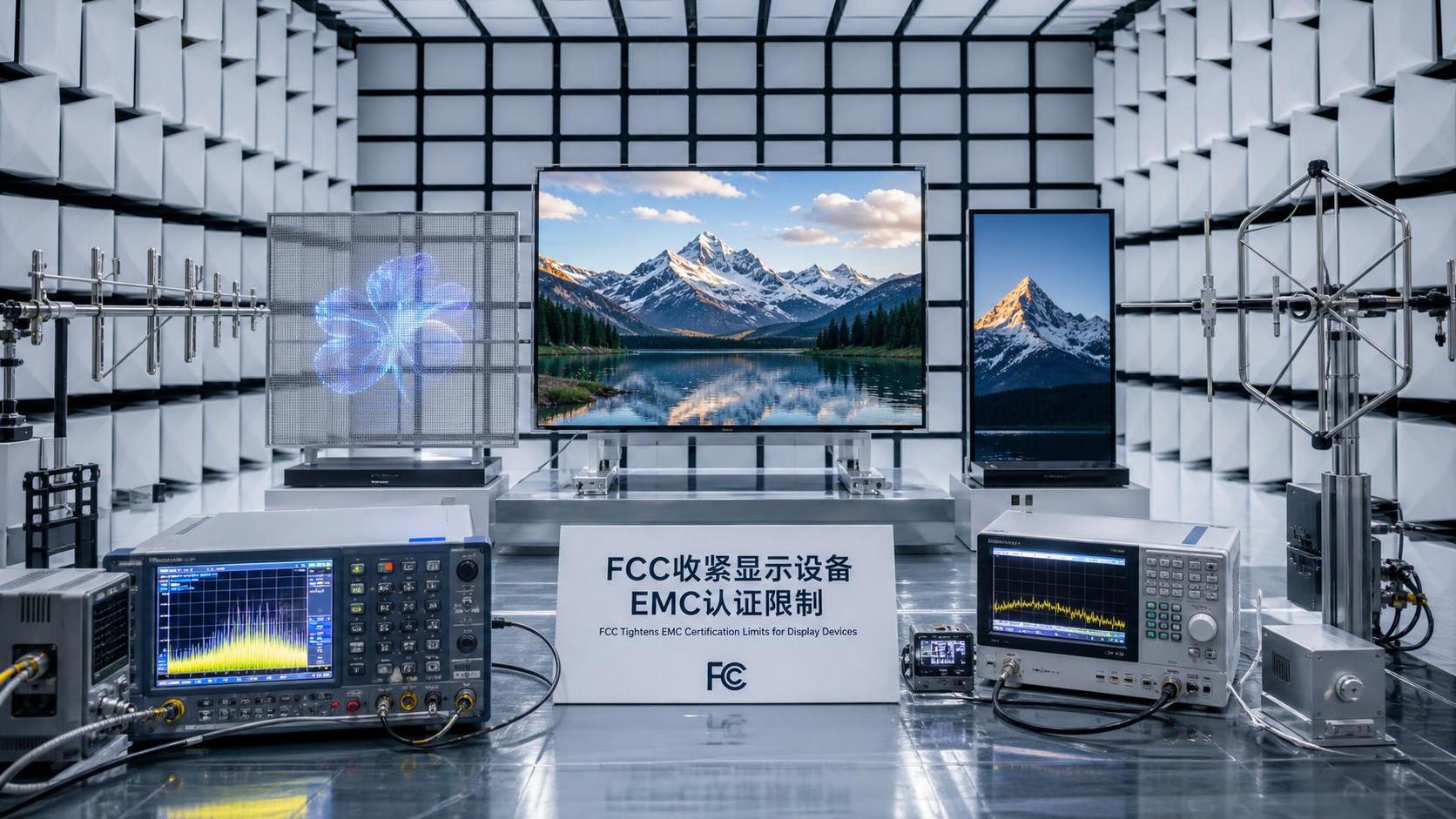
On August 5, 2026, the U.S. Federal Communications Commission (FCC) announced an update to EMC certification requirements for display equipment under Part 15 Subpart B, bringing commercial LED video walls, transparent LED screens, and outdoor high-bright LCD products into a stricter compliance frame. With new radiated emission limits added for the 30MHz–1GHz range and mandatory application to all newly filed models from September 1, 2026, this change is immediately relevant to exporters, certification teams, testing providers, procurement planners, and delivery schedules tied to the U.S. market.
What the FCC Has Confirmed
The confirmed facts are limited but commercially significant. The FCC issued the announcement on August 5, 2026 and revised Part 15 Subpart B for certain display devices, including commercial LED video walls, transparent LED screens, and outdoor high-bright LCD equipment. The revision adds radiated emission limits covering the 30MHz–1GHz band. The FCC also requires that all newly applied product models must pass FCC ID certification under the updated requirements starting on September 1, 2026.
The adjustment directly affects the compliance route and testing timeline for Chinese exporters shipping Fine-pitch Mini-LED, Transparent LED Screens, and Outdoor High-bright LCDs to the U.S. market.
Where the Pressure Will Appear First
Export programs aimed at the U.S. market
From an industry perspective, exporters are likely to feel the impact first because the rule change is tied directly to market access for newly filed models. The practical issue is not only whether a product can be sold, but whether its certification path remains aligned with planned shipment timing. What deserves closer attention is the link between model application schedules, FCC ID filing readiness, and customer delivery commitments for affected display categories.
Manufacturing and product compliance teams
For manufacturers, the immediate concern is the relationship between product design, EMC test preparation, and technical documentation. Analysis shows that the addition of a new radiated emission limit in the 30MHz–1GHz range may require closer internal review of whether current models intended for new applications are positioned for the updated FCC process. In business terms, this can affect sample preparation, test sequencing, document control, and the handoff between engineering and certification functions.
Testing and certification service providers
Certification-related companies and testing service institutions may see pressure on timing and coordination rather than only on technical workload. Observably, when a mandatory date is attached to newly applied models, applicants often need clearer filing plans, earlier test booking, and more disciplined report preparation. The main business impact here is likely to center on laboratory scheduling, application sequencing, and consistency between test materials and certification submissions.
Procurement, channel, and project delivery teams
Buyers, distributors, and project delivery teams that rely on affected display products should pay attention to model status and compliance documentation before locking in procurement or deployment schedules. This is especially relevant where products are tied to project milestones, installation windows, or formal vendor qualification steps. The core issue is not a general policy headline, but whether the selected model for a U.S.-bound project will fall under the updated filing requirement and whether the certification timeline supports the promised delivery date.
What Companies Should Review Now
Check which product pipelines involve new FCC ID applications
Analysis shows that companies should first separate existing business by model status and application timing. The key practical question is whether a planned shipment to the U.S. depends on a new FCC ID application after September 1, 2026. For affected product lines, internal teams should review whether commercial launch plans, customer quotations, and order acceptance assumptions still match the updated certification requirement.
Revisit test planning and technical file readiness
What deserves closer attention is the testing path around the newly added 30MHz–1GHz radiated emission limits. Even where execution details are not yet fully described in the provided information, companies should still review whether technical files, test samples, declaration materials, and model documentation are prepared in a way that supports the updated filing process. This should be treated as a compliance readiness check rather than as proof of any final execution outcome.
Align procurement and delivery commitments with certification timing
For sales operations and supply chain teams, the risk point is often the gap between customer delivery expectations and certification lead time. Observably, procurement plans, shipment promises, and installation schedules may need closer coordination where U.S.-bound display equipment falls into the affected categories. This does not confirm a specific delay scenario, but it does indicate that delivery planning should be reviewed against certification milestones.
Track changes in market-facing documents
From an industry perspective, tender documents, supplier qualification files, compliance statements, and after-sales records may become more sensitive to FCC certification wording once the new limit becomes mandatory for newly applied models. Since the provided information does not include detailed enforcement language, companies should treat this as an area to monitor rather than as an already settled documentation standard.
Why This Looks Like an Execution Signal
Observably, this update is more appropriate to understand as an execution signal with a defined compliance date than as a distant policy discussion. The presence of a mandatory start date for newly applied models means the market is dealing with a rule that affects filing decisions in the near term. At the same time, Analysis shows that the full operational effect still depends on how certification practice, documentation expectations, and customer-side acceptance criteria develop after the announcement.
That is why continued attention is warranted. The current information supports a clear reading of the rule change itself, but not a complete conclusion on how every testing, bidding, or delivery scenario will unfold in practice.
How the Market Should Read It
In practical terms, this development should be read as a concrete compliance change for affected display equipment entering the U.S. certification process through new model applications after September 1, 2026. It is not merely a background policy update, because it touches certification access, testing preparation, and shipment planning. At the same time, it should not be overstated beyond the facts provided. A measured reading is that the rule has landed, while its detailed market execution still merits close observation.
Basis of This Article and What Still Needs Verification
This article is based on the user-provided news title, event date, and event summary. For developments of this type, relevant source categories typically include official regulatory announcements, releases from supervisory authorities, customs or trade administration information, industry association updates, standards organization documents, and reporting by established professional media.
No specific official source link was provided in the input, so the underlying announcement link and any subsequent official explanatory materials still require further verification. What remains worth monitoring includes detailed implementation language, certification interpretation in practice, changes in tender or procurement documents, industry feedback, and how affected companies adjust their compliance and delivery arrangements.
Related News