
EU Tightens Rules on LED Signage Light Pollution
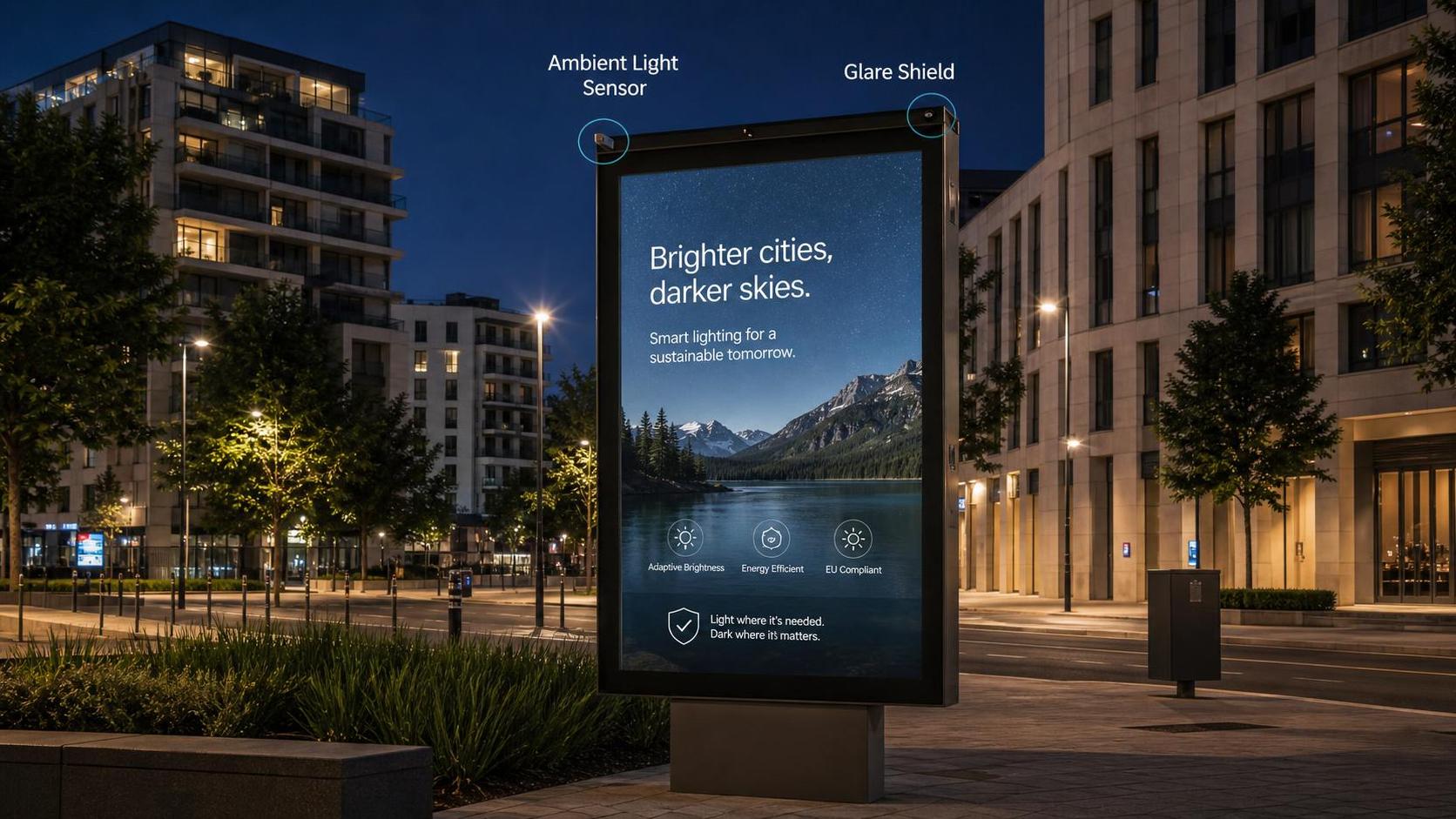
On 4 August 2026, the European Environment Agency released a new directive on outdoor digital signage light emissions, bringing high-brightness LED display products into the EU’s light-pollution compliance framework for the first time. For exporters, manufacturers, distributors, and project buyers, the key issue is no longer only display performance, but whether nighttime operating modes, optical control, and ambient-light sensing can meet the new compliance path for the European market.
What the directive sets out
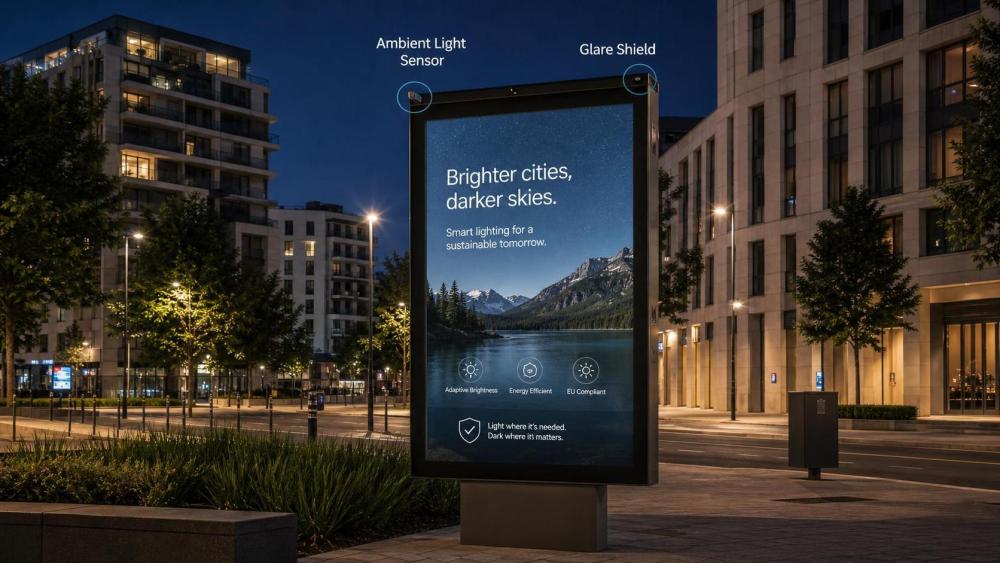
The directive, titled Outdoor Digital Signage Light Emission Directive (EU/2026/117), applies to high-brightness LED screens installed facing public roads and residential areas. It covers products including Outdoor High-bright LCDs, Transparent LED Screens, and Naked-eye 3D Displays. The rule requires dynamic brightness reduction to no more than 150 cd/m² between 22:00 and 06:00, together with beam-angle control and automatic ambient-light sensing modules.
Where the pressure will be felt first
Exporters shipping to the EU
For Chinese exporters, the most direct impact is on product design and certification preparation. Nighttime brightness control can no longer be treated as an optional feature if the screen is intended for public-road or residential-facing use. Product specifications, control logic, and supporting technical files may all need to align with the new rule before market entry.
Manufacturers building outdoor display systems
For manufacturers, the directive shifts attention to hardware and control-system integration. Brightness reduction alone is not enough if beam direction and ambient-light response are not built into the system. That means engineering teams need to review whether existing models can support the required operating behavior without redesign.
EU distributors and procurement teams
For EU distributors and buyers, the immediate task is procurement screening. Sourcing decisions now need to account for whether supplied products can satisfy the nighttime limits and related control requirements. Purchase documents, supplier declarations, and compliance checks may become more important in pre-order review and delivery acceptance.
What companies should check now
Confirm the applicable product scope
Companies should first check whether their products fall within the categories named in the directive, especially outdoor high-brightness screens used near roads or residential areas. That scope question will determine whether a model needs adjustment, additional documentation, or a different compliance route.
Review brightness control and sensing functions
The directive makes dynamic dimming and automatic ambient-light sensing central requirements. Firms should verify whether current designs can sustain the specified nighttime limit of 150 cd/m² and whether the control response is stable across operating conditions.
Prepare for certification and documentation changes
Because the rule is directly tied to CE-related compliance preparation, technical files, product descriptions, and test evidence should be reviewed early. For suppliers, this is also a communication issue: downstream buyers will likely ask for clearer proof that the product can support the new operating constraints.
Watch for further official clarification
The directive has set the direction, but businesses still need to follow how the rule is interpreted in practice. The main points to watch are scope clarification, compliance evidence expectations, and how quickly distributors and project owners begin to enforce the new requirements in tenders and purchase reviews.
How to read this signal
Analysis shows this is more than a one-off technical adjustment. It signals that outdoor LED signage is being pulled into a stricter environmental compliance framework, and that nighttime luminance control may become a standard design consideration rather than a special feature. At the same time, it is more appropriate to understand this as a rule that still needs close follow-up, especially on implementation details and certification practice.
What it means for the market
The most practical takeaway is that product design, compliance files, and commercial sourcing are now more tightly linked for outdoor display exports into the EU. This development should be treated as a regulatory signal with immediate product-level implications, not as a broad market forecast. For businesses exposed to the EU channel, the right response is to verify scope, confirm technical readiness, and track the next round of official clarification.
Source Note
This article is based on the user-provided news title, event date, and event summary. Relevant source types for this type of update would normally include official notices, regulatory documents, industry association updates, and authoritative media coverage. The specific official source link was not provided in the input, so it still needs to be verified in follow-up checks.
Related News