
FCC Tightens EMC Rules for LED Displays
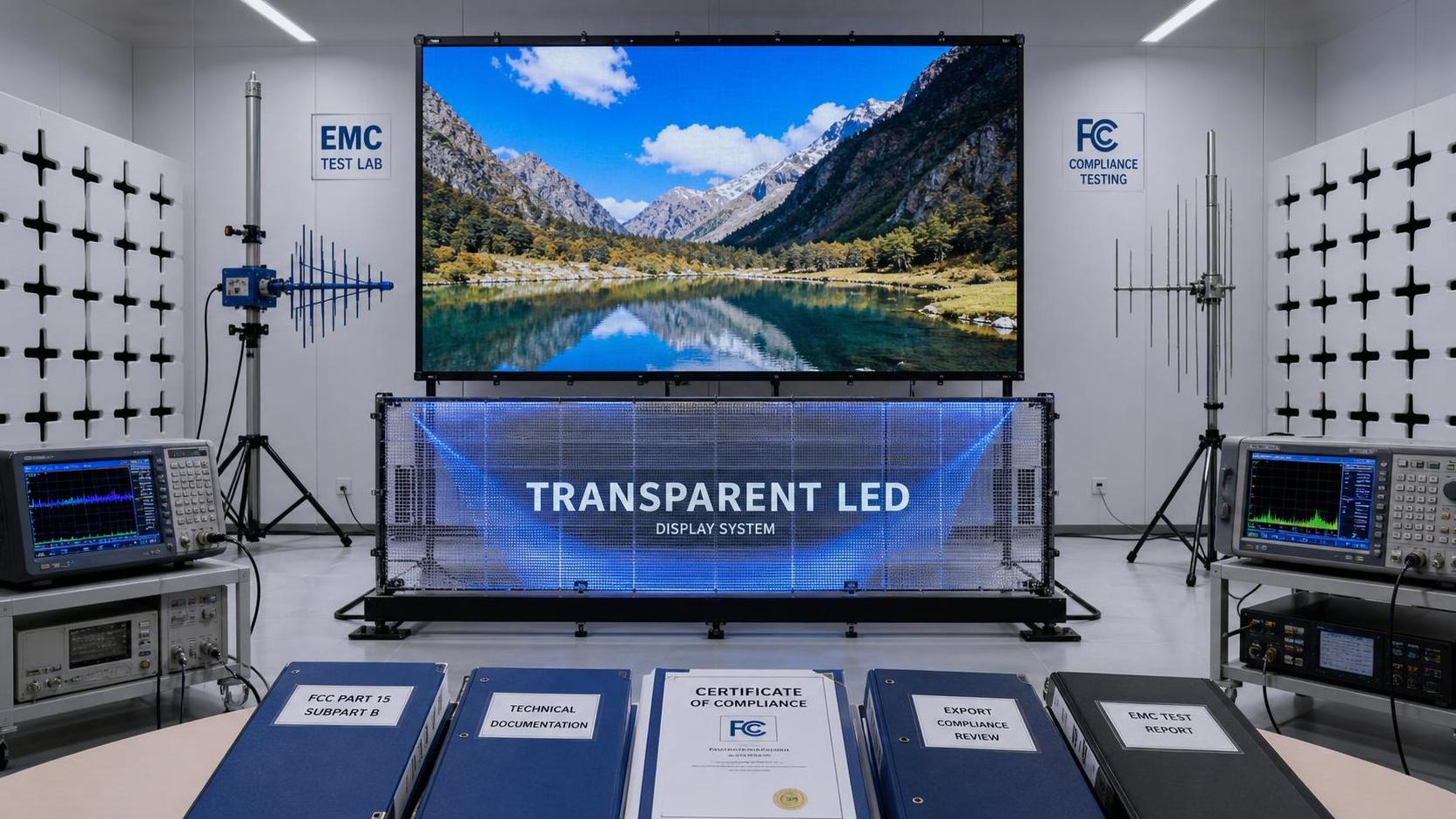
On August 3, 2026, the U.S. Federal Communications Commission (FCC) released a revision that changes the compliance path for certain LED display products entering the U.S. market. The update targets commercial LED video walls, transparent LED screens, and naked-eye 3D display devices, while drawing particular attention from exporters, system manufacturers, certification teams, and delivery planners because the new radiated emissions limits will become mandatory on September 1, 2026 and may directly affect approval timing and shipment arrangements.
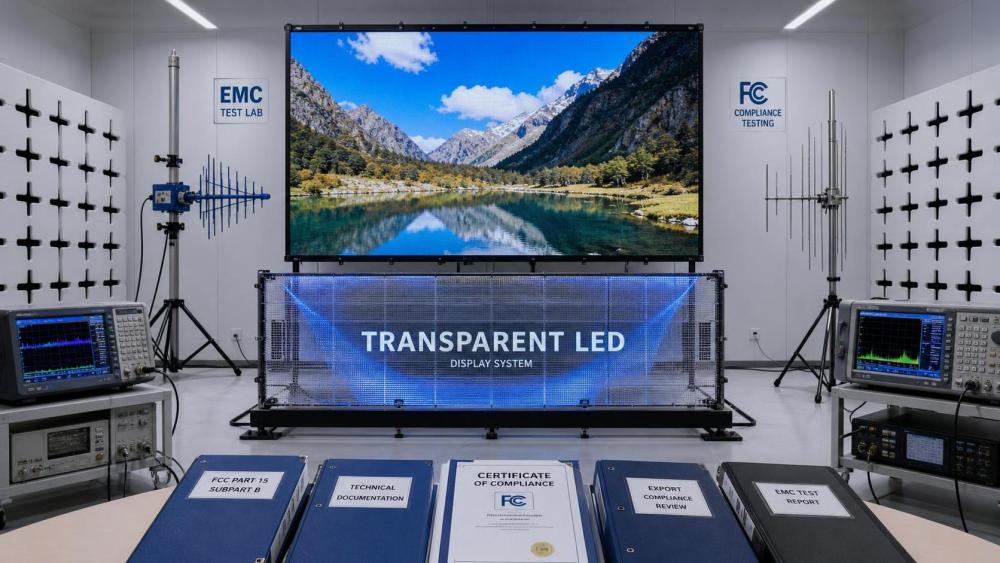
What the FCC Revision Confirms
The confirmed information is limited but commercially significant. According to the provided event summary, the FCC announced on August 3, 2026 that it is tightening radiated emissions limits for commercial LED video walls, transparent LED screens, and naked-eye 3D display devices. The revision also adds stricter control requirements for the 1-6GHz band.
The same notice further makes clear that complete systems exported to the United States must obtain FCC ID certification, rather than relying only on module-level certification. Based on the provided information, this adjustment directly affects the compliance access route and export delivery cycle of Fine-pitch Mini-LED, Transparent LED Screens, and Naked-eye 3D Displays.
Where the Pressure May Appear First
Export-facing system suppliers
From an industry perspective, companies shipping complete display systems to the U.S. may feel the impact most directly because the rule description points to whole-system FCC ID certification instead of module-only approval. The likely pressure point is the transition from product readiness to export readiness, especially where internal teams previously treated module certification as the main compliance milestone.
Manufacturing and integration stages
For manufacturers and integrators of commercial LED video walls, transparent LED screens, and naked-eye 3D displays, the effect may center on testing and validation steps. Analysis shows that stricter radiated emissions limits and the newly emphasized 1-6GHz range could shift attention toward how final systems are assembled, documented, and prepared for certification, rather than focusing only on individual components.
Supply chain and delivery coordination
Supply chain service providers, project coordinators, and delivery teams may also need closer attention because the provided information explicitly mentions an effect on export lead times. Observably, even without adding assumptions about specific delays, any rule change tied to mandatory certification at the complete-system level can influence scheduling, shipment sequencing, and customer communication around delivery commitments.
Buyers and project owners in the U.S. market
Procurement teams and end-use project owners may need to watch product qualification status more carefully. The reason is straightforward: where market entry depends on complete-system FCC ID certification, purchasing decisions may become more closely linked to documentation status and compliance timing for the finished display solution.
What Companies Should Track Now
Whether product classification is clear
Companies dealing in Fine-pitch Mini-LED, Transparent LED Screens, and Naked-eye 3D Displays should first confirm how their exported products fit within the categories described in the FCC revision. This is a practical issue because the rule change is tied to specific product forms and to complete-system treatment.
Whether certification planning still matches the new rule
What deserves closer attention is whether existing compliance workflows are still built around module-level assumptions. If an export program to the U.S. has been organized around module certification alone, the announced requirement for whole-system FCC ID certification changes the planning baseline for testing, documentation, and shipment release.
Whether delivery commitments need adjustment
Businesses with active U.S.-bound orders may need to review the gap between technical compliance work and customer-facing delivery schedules. The provided information already indicates possible effects on export delivery cycles, so contract timing, internal milestones, and client communication deserve practical review rather than late-stage correction.
Whether official wording changes further before enforcement
Analysis shows that this is also a monitoring issue. Although the enforcement date is clearly stated as September 1, 2026, companies should continue checking for any further official clarification on implementation language, testing expectations, or certification interpretation, especially where internal compliance decisions depend on narrow wording.
How This Should Be Read at This Stage
This development is more appropriate to understand as both an immediate operational change and a longer-term regulatory signal. The immediate part is clear from the provided facts: a mandatory date has been set, the radiated emissions limits are tighter, the 1-6GHz band receives stricter control, and complete systems must obtain FCC ID certification. The longer-term signal, based on observation rather than confirmed future policy, is that compliance review for advanced display products may increasingly focus on the finished system rather than only on certified modules within it.
At the same time, it would be premature to turn this into a broader market conclusion beyond the supplied facts. The current value of the update lies in how it reframes compliance preparation, export timing, and certification responsibility for affected LED display categories.
A Practical Reading of the Update
In practical terms, this FCC revision matters because it changes not just a test threshold but the point at which market access is judged for certain LED display systems entering the United States. For the industry, the most balanced conclusion is that this is already a concrete short-term compliance change, while its broader commercial implications still need to be tracked through implementation and follow-up clarification.
Basis of This Article
This article is based on the user-provided news title, event date, and event summary concerning the FCC revision released on August 3, 2026. For this type of industry update, commonly relevant source categories may include official regulatory notices, company compliance statements, industry association updates, authoritative media reporting, and standards-related documents.
A specific official source link was not provided in the input, so the exact official publication record still requires continued verification. Follow-up attention should remain on any additional FCC wording, implementation clarification, and practical certification guidance related to affected LED display systems.
Related News